|
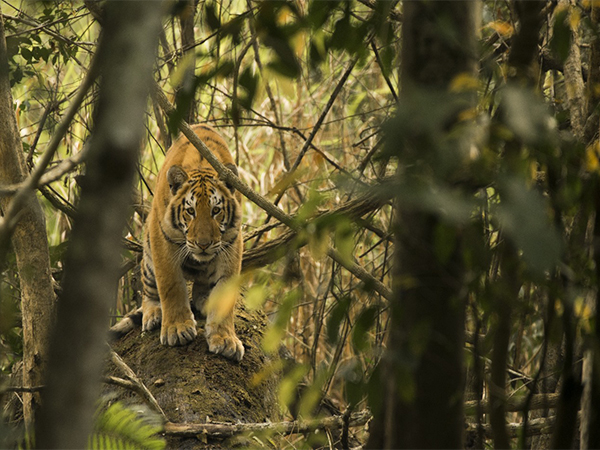
Assam''s Kaziranga National Park and Tiger Reserve has achieved another milestone, as it has become the home of the third highest density of tigers in the world, said an official statement from the Kaziranga National Park.
Kaziranga has the 3rd highest density of tigers (18 tigers per 100 sq km) in the world. On the occasion of Global Tiger Day, the national park has celebrated a significant milestone in wildlife conservation with the release of the "Status of Tigers in Kaziranga, 2024" report. "This vital document underscores our unwavering commitment to protecting our natural heritage for future generations," Sonali Ghosh, Field Director of Kaziranga National Park & Tiger Reserve, said. Assam Chief Minister Himanta Biswa Sarma wrote on X, "Assam is not just protecting tigers; it is reclaiming their kingdom. With the world''s third-highest tiger density, expanded reserves, and bold action against encroachment, the striped beasts of Assam continue to roam with power and pride." Sonali Ghosh, Field Director of Kaziranga National Park & Tiger Reserve, stated that the tiger population in Kaziranga Tiger Reserve has reached an impressive 148, marking a significant increase from the previous estimate of 2022. According to Ghose,"This growth is particularly notable due to the first-time sampling of the Biswanath Wildlife Division, where 27 recorded tigers have contributed to the overall increase. In the core Eastern Assam Wildlife Division, the population grew from 104 in 2022 to 115 in 2024, while the Nagaon Wildlife Division maintained a stable count of 6 tigers. The methodology for the tiger count involved the deployment of remotely triggered camera traps in accordance with the Phase IV Protocol of the National Tiger Conservation Authority (NTCA) and the Wildlife Institute of India, which follows a statistically robust mark-recapture framework to estimate tiger abundance and density." "Paired camera traps were systematically placed across 1,307.49 square km within three divisions of Kaziranga Tiger Reserve between Dec 2023 and April 2024, using a structured grid-based design to ensure comprehensive spatial coverage. Trap sites within each grid cell were selected based on intensive sign surveys to maximise the probability of detecting tigers and co-predators. Based on statistically robust techniques, a total of 148 adult tigers were identified in KTR''s three divisions--83 females, 55 males, and 10 individuals with undetermined gender," Ghosh added. The Field Director of Kaziranga National Park & Tiger Reserve further said that key drivers of this encouraging rise in tiger population are habitat expansion and protection. "An additional area of 200 square km, including 12.82 square km of encroachment-free area, has been added in recent years under Burhachapori-Laokhowa sanctuaries under Nagaon Wildlife Division, bringing more habitat under protection of the Tiger Reserve. This strategic extension has significantly expanded the landscape available to tigers, enabling increased movement, breeding, and dispersal opportunities across their range. In addition, the enhanced use of technology has revolutionised wildlife monitoring and protection. Along with camera traps, tools such as M-STrIPES (Monitoring System for Tigers - Intensive Protection and Ecological Status), drones, and infrared-based electronic surveillance systems ("Electronic Eye") are now integral to daily operations. These technological advancements have greatly improved anti-poaching measures, movement tracking, and habitat monitoring, leading to greater safety and better data," she said. She also added that, crucially, the integration of advanced technologies with the meticulous efforts of the forest frontline staff, including 113 trained Van Durgas, the female frontline staff of the Tiger Reserve, and the active support of civil society organisations and local communities, has significantly helped fill historical data gaps. "In recent years, Kaziranga''s tiger monitoring has produced gender-wise segregation data, offering a more accurate and detailed understanding of the reserve''s tiger demography. The rise in the tiger population is more than just a statistic; it signifies the health and resilience of the entire ecosystem within Kaziranga, which supports a diverse range of flora and fauna. The thriving tiger population is a testament to our successful conservation efforts. While we celebrate this milestone, we also recognise the responsibility it brings. It is crucial to continue investing in conservation initiatives, strengthen community involvement, and promote awareness about the importance of biodiversity," Ghosh said. (ANI)
|